Friday, December 14, 2012

Textbook Page 34: Question 15

15.) Twila made the object shown


a.) How can you use symmetry to help find the surface area of this object?

The object's top and bottom faces, left and right faces, and front and back are symmetrical.

b.) What is the surface area?


Wednesday, December 12, 2012

December 11, 2012

Today we learned the formulas for finding the surface areas (S.A) of a:

  1. Cube
  2. Rectangular Prism
  3. Pyramid
  4. Cylinder
In order to find the surface area of a cube, use this formula:

S.A = 6 s² 
(Where "s" is the measure of 1 edge.)
That means that to find the surface area of a cube, find the area of one face of the cube first. Then square that number (multiply it by itself), and multiply it by 6 and you have your final answer.

To find the surface area of a rectangular prism, do this:

S.A = 2B + Ph
(Where "B" is the area of the base formed by multiplying its length by its width. "P" is the perimeter of the base multiplied by "h", the height of the prism. 

or.......

S.A = 2 (lw + lh + wh)
(Where "l" stands for length, "h" is height and "w" is width.)

Finding the surface area of a pyramid... :

S.A = B + ½ Ps
(Where "B" is the area of the base. "P" is the perimeter, "s" is the slant height.)

The surface area formula for a cylinder:

S.A = π r ² + 2 π rh

or......

S.A = 2 π r (r + h)
(Where "r" is radius and "h" is height.)

And lastly, for finding the surface area of an isosceles triangular prism:

S.A = 2 (bh/2) + 2 b2 h2 + B)
(Where "b" is the base of the triangle, "h" is the height of the triangle, "b2" the base of the rectangle, "h2" is the slant height of the rectangle, and "B" represents the base of the figure found by multiplying "b" by "b2"

(sorry I couldn't upload any pictures!)

Sunday, December 2, 2012

Test: Rational World Problem Question #5

5.) A round chocolate cake is cut into eighths. A marble cake of the same size is cut into sixths. if Paulo eats three slices of chocolate cake and five slices of marble cake, how much cake is left over.


Paulo eats three slices from the chocolate cake and five slices from the marble cake.

The chocolate cake will have five pieces out of eight left while the marble cake will have one piece left out of six.
  
 *I'm not sure if I have to add both left overs together*

5/8 + 1/6= 

15/24 + 4/24 = 19/24 


Rational Number Test - Question 10

10. A 1-L can of paint covers 12m(squared). Determine the maximum dimensions of a sqaure ceiling you could paint with 3 1/2 L of paint. Express your answer to the nearest hundredth of a metre.

          x3.5
L    1   =  3.5 
C   12      42
          x3.5

L= litres              C= cans of paint

square root of 42= 6.48

The maximum dimensions of a sqaure ceiling you could paint is 6.48m by 6.48m.

Test: Rational World Problem Question #4

4. The figure below is composed of seven congruent squares. The area is 43.75 cm2. Calculate its perimeter. 


A = area 
P = perimeter  
A = 43.75 cm 

 7 congruent squares 
14 congruent squares = P 


First divide the area of the shape by the number of congruent squares to get the area of one  square.


Find the square root of the area of one square to get the side length. 


Multiply the side length of one square by the number of sides to get the perimeter. 


Algebraic Way 


The perimeter of the shape is 35 cm.


Saturday, December 1, 2012

Test: Rational Word Problem Question 2

Question:

Information you will need to answer the question:
You would have to convert 1.5 hours into minutes which is 90 minutes.
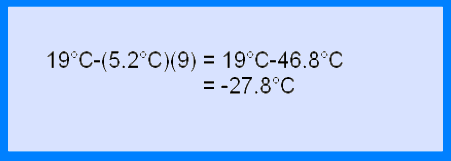
You would then divide 90 minutes by 10 minutes because 5.2°C is dropping every 10 minutes,

Solution 1: 
Multiply how much the temperature drops by 9 to find the total of how much it drops all together.
You then subtract your original temperature of 19°C by 46.8 to get your answer of (-27.8).

Solution 2:
This is the grade 9 way.  

Sentence answer:
Always write a sentence answer after a word problem.

Test: Rational Word Problem Question 6


  • First I had to find how many times does 1  3/4  goes into 15   1/4.
    • I made this easier for myself by changing the fractions into decimals.
  • Then I found out that 1.75 goes into 15.25, eight times.
    • This is because 1.75 x 8 = 14 and if you were to multiply by a higher number, your answer will be longer than 15.25. For example 1.75 x 9 = 15.75.
  • This now let's us know that 14.00 m of the plank is cut in equal pieces of 8.
  • Now we have to find out how much of the plank is left over. 
    • We find the solution to this by subtracting the length of the plank which is 15.25 by 14.
    • 15.25 - 14.00 = 1.25 m 
  • So there is 1.25 m left over of the wooden plank.